
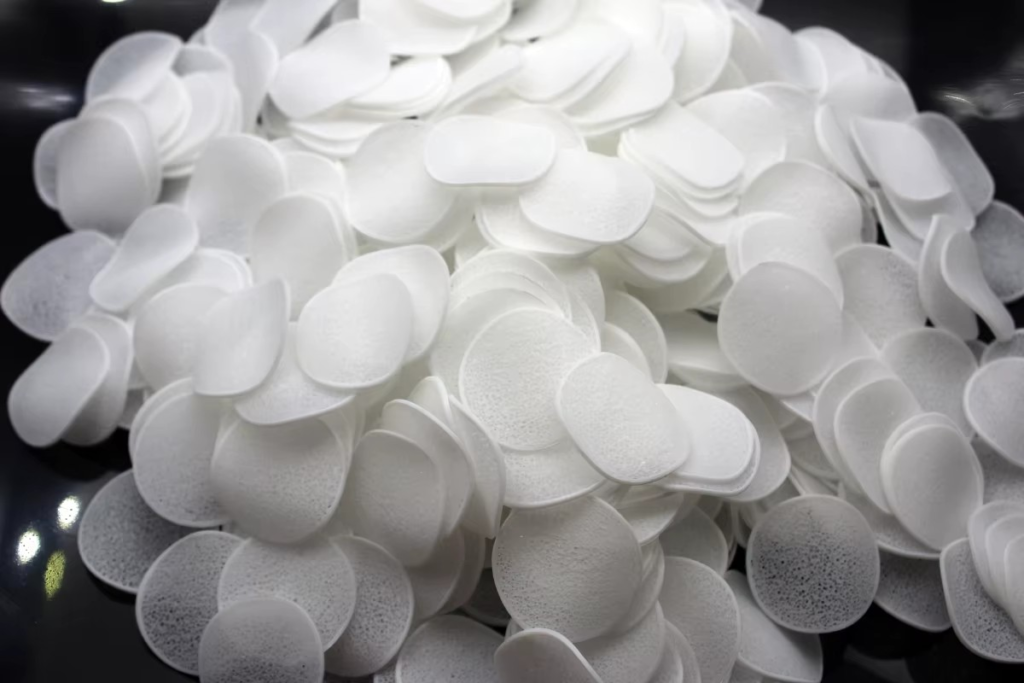
1. HDPE 31x1mm MBBR Carriers Biochip Filter Media: The Definitive Guide to Quality, Performance & Applications
In today’s world of strict environmental regulations and growing demand for sustainable water solutions, MBBR (Moving Bed Biofilm Reactor) technology has become the cornerstone of modern water treatment. At the heart of this revolutionary technology lies the HDPE 31x1mm MBBR Carriers Biochip Filter Media – a high-performance, durable, and efficient solution designed to elevate biofiltration results across industries. Whether you’re upgrading a wastewater plant, optimizing industrial processes, or enhancing aquaculture systems, this guide will take you through every critical detail: from its premium raw materials and precision manufacturing to its core uses, wide-ranging applications, and why Zhongci Environmental Ceramics Materials is your trusted supplier.
https://chempacking.cn/wp-content/uploads/2025/04/H8cf61fa13ec54b0588084ab1f9eebd19M.jpg
2. Raw Material: PE100-Grade HDPE – The Foundation of Superior Performance
The HDPE 31x1mm MBBR Carriers are crafted from 100% PE100-grade High-Density Polyethylene (HDPE) – the gold standard for water treatment media. Unlike low-quality HDPE or alternative materials (such as PP, ceramic, or foam), PE100 HDPE is selected for its unrivaled combination of properties that directly enhance the carrier’s functionality, durability, and safety:
Key Properties of PE100 HDPE
- Exceptional Durability: With a high molecular weight (≥120,000 g/mol) and tight molecular structure, PE100 HDPE offers superior tensile strength (≥30 MPa) and impact resistance. This means the carriers can withstand years of mechanical stress – including aeration turbulence, mixing, and handling – without cracking, deforming, or breaking.
- Chemical Inertness: PE100 HDPE is completely resistant to a wide range of harsh substances found in wastewater, such as strong acids (sulfuric acid, hydrochloric acid), alkalis (sodium hydroxide, ammonia), organic solvents (methanol, acetone), heavy metals (lead, cadmium), and industrial pollutants (phenols, dyes). It never leaches toxic chemicals into treated water, complying with global standards like FDA 21 CFR Part 177 and EU REACH.
- UV & Thermal Stability: Infused with UV stabilizers (e.g., carbon black masterbatch) and antioxidants, the carriers resist photo-oxidation and thermal degradation. They perform reliably in temperatures ranging from -20°C to 80°C, making them suitable for both cold climates and tropical regions – with a service life of 15+ years.
- Eco-Friendly & Safe: PE100 HDPE is a non-toxic, food-grade material that is 100% recyclable (recycling code #2). It meets ISO 14001 environmental standards and does not release microplastics, aligning with sustainable water treatment goals.
- Optimal Density for Fluidization: With a density of 0.95 g/cm³ (±0.01 g/cm³), the carriers are perfectly balanced to float and fluidize in MBBR reactors. They avoid sedimentation (too heavy) or floating clumps (too light), ensuring uniform mixing with wastewater and oxygen.
Raw Material Quality Control
At Zhongci Environmental, we source PE100 HDPE resin exclusively from top global suppliers (e.g., Basell Polyolefins, ExxonMobil Chemical) to guarantee consistency. Every batch of resin undergoes strict testing:
- Molecular weight distribution (via GPC analysis)
- Melting flow rate (0.2–0.5 g/10min at 190°C/2.16kg)
- Moisture content (≤0.02%)
- Heavy metal content (≤0.001%)Only resin that meets our rigorous standards is approved for production – ensuring the final carriers deliver uncompromised performance.
3. How It’s Made: Precision Manufacturing for Optimal Functionality
The production of HDPE 31x1mm MBBR Carriers is a highly specialized process that combines advanced machinery, strict quality control, and proprietary techniques. Each step is designed to optimize the carrier’s structure, surface properties, and ability to support microbial growth:
Step 1: Raw Material Preparation & Blending
- Drying: The PE100 HDPE resin is dried in a dehumidifying dryer (80°C for 4 hours) to remove residual moisture (≤0.02%). This prevents bubble defects during molding.
- Additive Mixing: The dried resin is blended with a precise formula of additives: UV stabilizers (2–3% by weight), antioxidants (0.1–0.2%), anti-static agents (0.05%), and color masterbatch (1–2%). Blending occurs in a twin-screw extruder (300 rpm, 160–180°C) to ensure uniform distribution.
Step 2: Precision Mold Design
We use custom CNC-machined molds (H13 tool steel) with 1,200 cavities per mold. The molds are engineered to exact specifications:
- Dimensions: 31mm diameter (±0.05mm) and 1mm thickness (±0.03mm)
- Surface features: Micro-grooves (0.1mm depth, 0.2mm width) to enhance microbial adhesion
- Internal structure: Honeycomb-like porous design to maximize surface areaMolds are inspected weekly with a coordinate measuring machine (CMM) to maintain accuracy.
Step 3: Injection Molding
The blended resin is fed into precision injection molding machines (Haitian MA3800II) with optimized parameters:
- Barrel temperature: 180°C (Zone 1) → 200°C (Zone 2) → 210°C (Zone 3) → 220°C (Nozzle)
- Injection pressure: 80–100 MPa
- Cooling time: 15–20 seconds
- Hold pressure: 40–60 MPa (to prevent shrinkage)This process ensures each carrier has a consistent shape, thickness, and internal structure.
Step 4: Surface Modification
To boost microbial adhesion, the carriers undergo two key treatments:
- Plasma Treatment: Atmospheric oxygen plasma increases surface energy from 30 mN/m to ≥60 mN/m, creating micro-pores (1–5 μm) that boost specific surface area by 20–30%.
- Corona Discharge: A secondary treatment enhances surface roughness (Ra = 0.8–1.2 μm), creating “micro-niches” for fast biofilm growth (microbes attach within 24 hours).
Step 5: Porosity Optimization & Testing
- Dual-Layer Porous Structure: Outer macro-pores (50–100 μm) for aerobic microbes, inner micro-pores (5–10 μm) for anaerobic microbes – enabling simultaneous nitrification and denitrification.
- Structural Testing: Each batch is tested for compression resistance (withstands 50 N without deformation), impact resistance (10 drops from 1m onto concrete), and fluidization (100% fluidization at ≥0.3 m³/(m²·h) air flow).
Step 6: Quality Inspection & Packaging
- 100% Visual Sorting: Automated optical machines (10,000 units/hour) remove defective carriers (misshapen, cracked).
- Dimensional & Chemical Testing: Random samples are measured for size accuracy and immersed in harsh chemicals (10% H₂SO₄, 10% NaOH) for 30 days – no weight loss or damage allowed.
- Packaging: In moisture-proof PP woven bags. HS CODE: 3926909090.
4. Core Uses: What Does HDPE 31x1mm MBBR Carriers Do?
The primary purpose of HDPE 31x1mm MBBR Carriers is to act as a high-performance biological scaffold for microbial growth in MBBR systems. Their design solves three critical water treatment challenges, delivering unmatched efficiency:
Use 1: Support Microbial Colonization
With a specific surface area of ≥600 m²/m³ (3–5x higher than traditional media like gravel or ceramic rings), the carriers provide ample space for beneficial microbes (bacteria, fungi, protozoa) to attach and form a biofilm. The dual-layer porous structure creates a “gradient environment”:
- Outer layer: Aerobic microbes break down BOD₅, COD, and ammonia.
- Inner layer: Anaerobic microbes convert nitrate to nitrogen gas (denitrification).This enables “single-reactor nitrogen removal,” simplifying system design and cutting costs.
Use 2: Optimize Mass Transfer
The carriers’ fluidization and porous structure enhance the transfer of oxygen, nutrients, and pollutants:
- Oxygen Transfer Efficiency (OTE): ≥25% (30% higher than smooth carriers) – smaller air bubbles and turbulent flow speed up oxygen diffusion into the biofilm.
- Pollutant Diffusion: COD and ammonia diffusion rates increase by 40–50%, enabling faster degradation.
Use 3: Enhance System Stability & Flexibility
- Shock Load Resistance: The large biomass (10–15 g/L MLSS) buffers against sudden changes in wastewater quality (pH, temperature, pollutant load) – ideal for variable flows in municipal and industrial settings.
- Reduced Sludge Production: Sludge yield is 0.2–0.3 kg MLSS/kg BOD₅ (50% lower than activated sludge systems), cutting disposal costs.
- Energy Savings: No backwashing required (unlike sand filters) – aeration energy consumption is reduced by 20–30%.
Use 4: Minimize System Footprint
MBBR systems with these carriers require 30–50% less space than traditional activated sludge systems. For example, a 10,000 m³/day wastewater plant needs 750–1,050 m² of tank area (vs. 1,500 m² for activated sludge) – perfect for urban retrofits or space-constrained sites.
5. Where It’s Used: Key Application Fields
The versatility and performance of HDPE 31x1mm MBBR Carriers make them indispensable across a wide range of water treatment scenarios. Below are their most common uses, with industry-specific benefits:
5.1 Municipal Wastewater Treatment
- Scenarios: Secondary/tertiary treatment in wastewater plants (WWTPs), retrofitting aging systems, decentralized treatment (residential communities, rural areas), water reuse.
- Challenges: High flow rates, variable pollutant loads, strict discharge standards.
- Results: BOD₅ removal ≥95% (from 200–300 mg/L to ≤10 mg/L), ammonia removal ≥98% (from 30–40 mg/L to ≤1 mg/L), nitrogen removal ≥85%.
5.2 Industrial Wastewater Treatment
- Petrochemical/Oil Refining: Treats high-COD (10,000–50,000 mg/L), high-oil wastewater – hydrocarbon/phenol removal ≥90%.
- Textile/Dyeing: Removes color (≥90%) and COD (≥85%) from pH-extreme (3–11) wastewater.
- Pharmaceutical: Breaks down toxic solvents and antibiotics – COD removal ≥80%, toxicity reduction ≥75%.
- Food & Beverage: Handles high sugar/BOD₅ loads (5,000–20,000 mg/L) – BOD₅ removal ≥98%, sludge reduction 60%.
- Pulp & Paper: Reduces lignin (≥70%) and COD (≥85%) from high-SS wastewater.
- Electroplating: Enhances heavy metal and cyanide removal – cyanide reduction ≥95%.
5.3 Aquaculture Water Treatment
- Scenarios: Recirculating Aquaculture Systems (RAS), intensive fish farms (tilapia, shrimp, salmon), pond purification.
- Benefits: Ammonia removal ≥99% (to ≤0.02 mg/L), nitrite removal ≥99% (to ≤0.01 mg/L), water exchange reduced by 80–90% – saving resources and lowering fish mortality by 50%.
5.4 Drinking Water Treatment
- Scenarios: Pre-treatment (algae/turbidity removal), micro-pollutant (pesticides, pharmaceuticals) removal, taste/odor control.
- Results: Micro-pollutant removal ≥80%, algae reduction ≥95%, disinfection byproduct (DBP) formation reduced by 40–60% – meeting WHO standards.
5.5 Landfill Leachate Treatment
- Challenge: High COD (5,000–50,000 mg/L), high ammonia (1,000–5,000 mg/L), refractory organics.
- Result: Ammonia removal ≥98%, biodegradable COD removal ≥75% – withstands high toxicity.
5.6 River & Lake Restoration
- Scenarios: In-situ eutrophication control, black odor water remediation.
- Results: Total nitrogen (TN) reduction ≥60%, total phosphorus (TP) reduction ≥70%, water clarity improved from 0.5m to 2m.
5.7 Reclaimed Water Reuse
- Scenarios: Industrial cooling, irrigation, toilet flushing, landscape water.
- Result: Meets reuse standards.
6. Choose Zhongci Environmental: Your Trusted Supplier of HDPE 31x1mm MBBR Carriers
When it comes to high-quality MBBR filter media, Zhongci Environmental Ceramics Materials stands out as a global leader. We’re committed to delivering products that combine performance, durability, and value – backed by unmatched support:
Why Zhongci Environmental?
- Uncompromised Quality: Our carriers meet standards.
- Technical Expertise: Our team of 15+ environmental engineers provides free consultation, reactor design, carrier filling rate optimization. We offer custom solutions for specialized wastewater.
- Global Supply Capacity: With 8 production lines and 50,000 m³ annual capacity, we fulfill large orders (10,000+ m³) in 30 days. We ship to 50+ countries, handling all customs documentation (HS CODE: 3926909090).
- Cost-Effective Value: Vertical integration (raw material to production) reduces costs, thanks to long service life and energy savings.
Get in Touch Today
Ready to upgrade your water treatment system with the best HDPE 31x1mm MBBR Carriers Biochip Filter Media? Visit our website for free samples, technical datasheets, and competitive quotes:
Zhongci Environmental Ceramics Materials🌐 Official Website: www.chempackings.com

